
deepseek harness
DeepSeek Harness: What the Developer Preview Actually Ships
DeepSeek-V4 Team · September 14, 2026 · 6 min read
Keywords: deepseek harness, deepseek agent framework, dsh plugins
Published: September 14, 2026 Author: DeepSeek-V4 Team
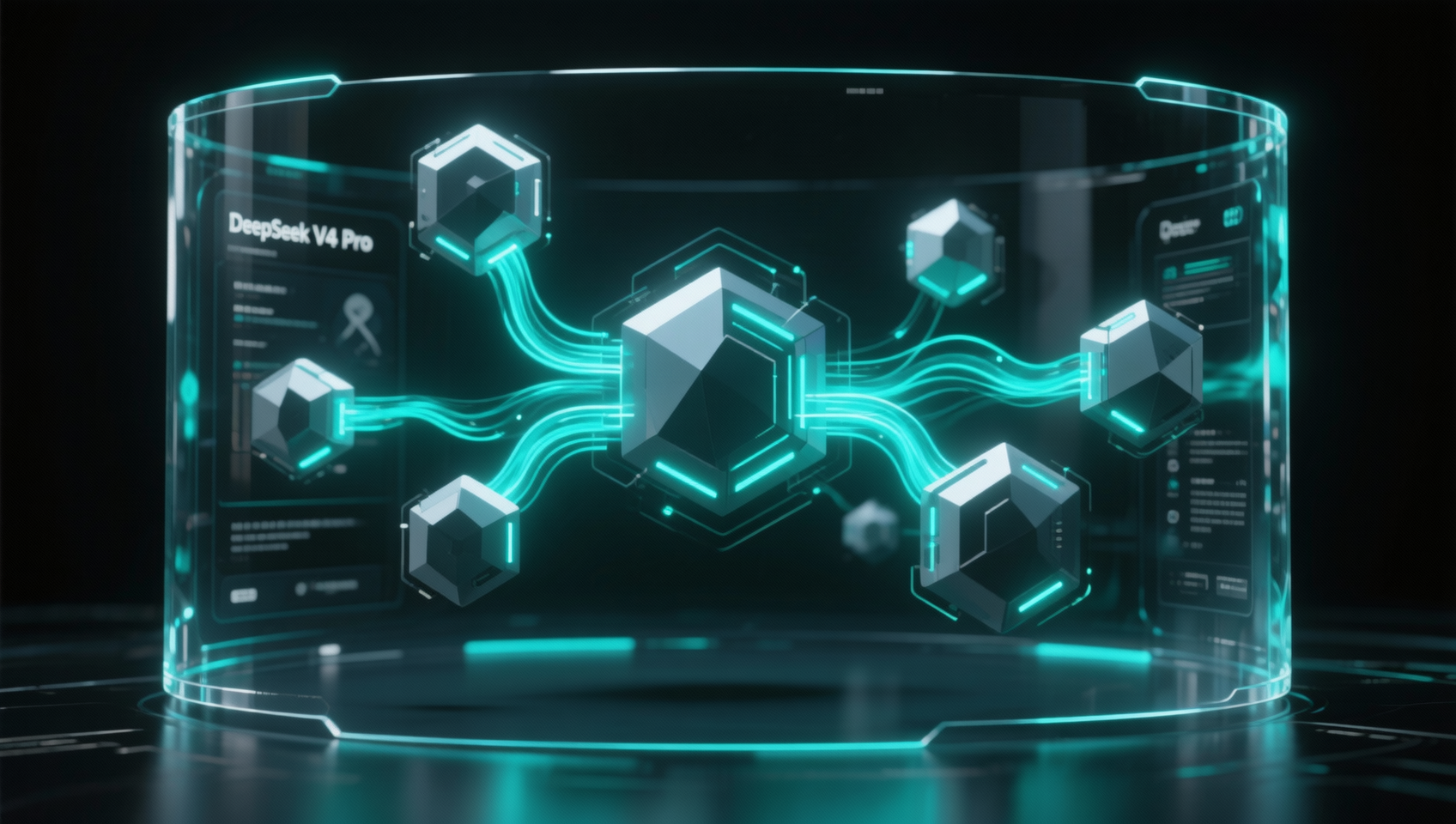
DeepSeek released Harness into a crowded category, so the useful question is not whether it is “another agent framework.” The useful question is where it draws the boundary. Harness is an open-source agent host whose major subsystems are plugins. The official shorthand is “everything is a plugin,” and the project uses Cordis as its composition layer.
That choice matters more than a model leaderboard. A model can decide what to do next, but a working agent also needs a user interface, session state, tools, permissions, and a way to replace one integration without rebuilding the whole application. Harness is trying to make those pieces independently composable.
It is also explicitly a developer preview. The maintainers warn that compatibility-breaking changes will happen. Anyone evaluating it should hold those two ideas at once: the architecture is interesting, and the current package is not a stable platform contract.
What shipped, in plain terms
The shortest supported launch path is a Node.js command:
npx @deepseek-ai/dsh webIt starts a local web interface on http://127.0.0.1:3080 by default. A source checkout uses pnpm: install dependencies, build the repository artifacts, then run pnpm dsh web. Those are two different evaluation paths. The npm command is the sensible first look; a source build is for people who need to inspect or change the host itself.
The local address is a meaningful detail. Harness is not introduced as a hosted chat page that happens to offer extensions. It is a local agent host with a web front end. Under SSH it does not try to open a remote browser; it prints the address so the operator can decide how to forward the port. --no-open gives the same explicit control on a local machine.
The repository also treats plugin discovery as part of the product surface. Community projects can use the dsh-plugin GitHub topic. That is a small convention, but it shows how DeepSeek expects the ecosystem to grow: not as forks of one monolith, but as separately published capabilities.
“Everything is a plugin” is a maintenance bet
Plugin architectures sound tidy until state and timing enter the picture. An agent tool may be registered after a session starts, removed while another task is running, or depend on a service that is not ready yet. Harness builds on Cordis, whose stated design goal is spatiotemporal composability. In practical terms, components need to coexist across both structure and lifecycle, not merely appear in a configuration file.
That can pay off for teams maintaining several agent products. A logging component, model adapter, or UI feature can be packaged around a clear lifecycle instead of being wired into every application entry point. It can also make failures easier to isolate: if a plugin does not load, the host should still have a comprehensible boundary around the failure.
The cost is indirection. When everything is replaceable, a reader cannot understand the system by following one call stack. Version compatibility becomes a matrix: host version, plugin API, plugin dependencies, and any external service it wraps. During a developer preview, that matrix moves quickly.
The part teams should test before features
The repository puts a safety notice next to the quick-start instructions. Treat that ordering as product guidance, not boilerplate. An agent host can read files, call tools, or invoke commands depending on installed plugins. The model is only one source of behavior; plugin code and user-supplied instructions are others.
A responsible trial starts in a disposable directory with synthetic data. Do not point the first run at a home directory, production credentials, SSH keys, or a repository containing deployment secrets. List the plugins that load, note which network and filesystem operations they can perform, and capture the exact package version used for the test.
Prompt injection is also a host problem. If an agent reads an issue, web page, or document, content inside that source may try to redirect the agent. A plugin system needs permission boundaries that remain effective even when the model chooses a bad next action. Before adopting Harness for real work, verify how the installed tool plugins request approval, scope paths, and report what they changed.
Where Harness fits beside a chat product
Harness and a browser chat solve different jobs. A managed chat is useful when someone wants to ask questions, analyze supplied material, or compare model behavior without maintaining a local agent runtime. Harness is for developers who want to assemble the runtime itself.
That distinction prevents an easy category error. Harness is not evidence of a new model release, and installing it does not by itself provide inference. An agent host still needs a configured model or service. Likewise, a powerful model does not remove the need for tool permissions, plugin lifecycle management, and audit logs.
For a team exploring DeepSeek-powered workflows, a sensible split is to prototype prompts and task definitions in a chat environment, then move only the workflows that truly need local tools into an agent host. This keeps early experiments cheap while preserving a path to deeper integration.
Who should try it now
Harness is a good preview for framework authors, plugin developers, and platform teams already comfortable debugging Node.js projects. It is especially relevant when the goal is to compare agent components or build a reusable internal plugin.
Skip it for now if you need a stable API, a supported enterprise deployment, or a set-and-forget desktop assistant. The official compatibility warning is direct. A production pilot should pin versions and budget time for migrations; a hobby test can simply be rebuilt when interfaces move.
A fair evaluation rubric
Ignore demo theatrics and score the host on five mundane tasks:
- Can a new installation be reproduced from a clean machine?
- Can an operator identify every loaded plugin and its permissions?
- Does disabling one plugin leave the rest of the host usable?
- Are tool calls and file changes visible enough to audit afterward?
- Can the team pin the package and recover after an upgrade fails?
If Harness performs well on those checks, its plugin model may reduce long-term integration work. If it only excels in a prepared demo, the preview is still useful as an architecture reference, but not yet as infrastructure.
The release is notable because DeepSeek is publishing more than a model endpoint: it is publishing an opinion about how agent software should be assembled. The next signal will not be a star count. It will be whether plugin contracts become stable enough for third-party maintainers to depend on them.
Source checked: DeepSeek Harness official repository, accessed 14 September 2026.